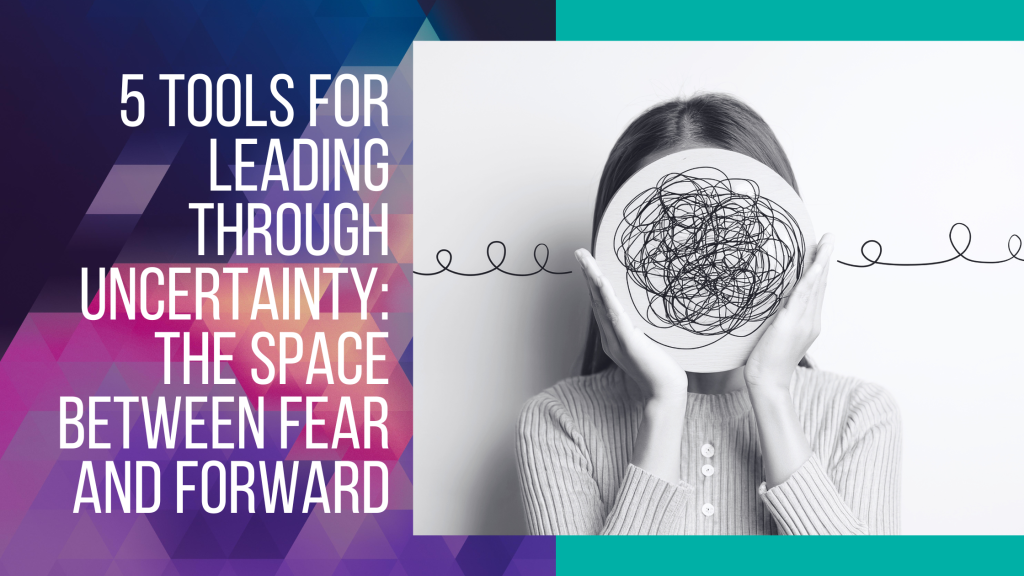
Does uncertainty have to cause stress?
Any AI platform or even a regular, good-ol-days type internet search will probably tell you “No, uncertainty does not have to cause stress.”
My lived experience, however, seems to indicate something different. Maybe it’s not that it necessarily has to cause stress, but that it certainly can, and for me, it certainly DOES.
I was recently reflecting with my partner on the amount of change the last year has held for us, with a big move to a new part of our state in a totally different climate, job changes, school and social life changes for our little one, big business changes on the horizon in my world, and more. He looked at me and said, “You know it’s all been going on a lot longer than that, right?” As I thought back, I realized the real changes started back in January of 2025. That’s almost 18 months of nothing but change! “No wonder I feel so terrible,” I blurted. I hadn’t realized just how much really had been changing in multiple arenas of my life, and I certainly hadn’t taken into account that impact.
In a subsequent conversation with one of my beloved coaching clients when asked how I was doing, I relayed that I was intentionally making some moves that would be great in the long run but were once again creating exceptional amounts of change, necessary learning, and upheaval. Her response? “Yeah, but you’re like the Queen of Change. You’re always changing things and trying some huge, brand new thing you have to figure out.”
That stopped me in my tracks. Me? The Queen of Change? I’d always thought of myself as the Queen of Being Settled. (Or at least the Queen who desperately wanted things to feel settled!) It caused an important moment of self-reflection and exploration to begin to think of myself as someone familiar with the ebbs and flows of change. As someone who could possibly even be comfortable in the throes of change. Dare I even say, as someone who could even have confidence moving through change?
I love to share with clients the phrase, “Discomfort does not equal disconfirmation.” The presence of discomfort or doubt doesn’t mean we should not proceed. Now, I do think discomfort is always a great reminder to look around and look inside and see if anything needs to change, but I don’t think it has to mean something is truly wrong, either! At the same time, just because I have experience with these doesn’t mean I’m not still feeling the self-doubt or fear. If you’re thinking experience eliminates that, think again. I feel it all the time, but I’ve learned and created a few more tools to deal with it now. Here are some of my favorite strategies to keep moving forward despite the fear:
- Identify it clearly: Same old story, or something new?
Uncertainty has a way of reactivating old fears, which can make it even more difficult to figure out how to proceed. Labeling uncertainties, fears, worries, and concerns as truly new or as ones you’ve already faced before will help you recognize where you’ve already dealt with something, which ones you already have tools for, and which ones may be new and, in turn, require different support. - Remember: Both can exist
You can be successful and still be scared! I love to remind my clients (and myself, often) that two things can exist. We can be afraid and still choose courage. - Delineate: Helpful or unhelpful question?
Perseverating on unhelpful questions like “How will this end?” or “What might happen?” fall into the unhelpful bucket, because they’re rooted in speculation instead of reality. Instead, try rerouting your worry-inclined brain to more helpful questions like “What is the next right thing? What data do I actually have, and what is it indicating? Which of these problems are real vs. imagined?” (Shoutout to Anna from Frozen for the first question!) - Focus: Figure out today instead of trying to fight tomorrow
Mental time travel, imagining and reimagining worst-case scenarios, and mentally and emotionally trying to prepare for every possible outcome are fast tracks to draining current capacity by anticipating potential stressors. Every time you drift into the future, bring your focus back to today and what’s immediately in front of you. It’s a skill you’ll develop over time if you ignore the repetition and keep focusing your attention on the immediate known instead of the future unknown. - Reduce: Minimize the “emotional static”
I’m all too familiar with emotional static. Heck, I think most of us are at this point! Way too much information, too many opinions, too much noise, overthinking, overworking, overcommitting, overdoing… All of that can make it hard to hear our inner voice and feel our inner peace. I’ve had to get real with myself about this and focus on what I can control. I’m back to daily movement, daily meditation, prioritizing sleep, doing what I can to support and regulate my nervous system, and limiting external inputs (sensory, informational, environmental, and otherwise!) so I can get clearer. It takes some effort, but it’s worth it.
At the end of the day, we’ll never eliminate uncertainty. But we can learn to become steadier when we find ourselves there, and we can also learn to stop losing ourselves to it.
No matter what you’re facing, I’ll be over here cheering you on and walking right beside you, practicing these same things until I get to the next point that feels more certain.
And then you can be darn sure I’ll celebrate the heck out of it for as long as it lasts!